Mold Inspection & Testing in Aurora
Professional mold assessment and air-quality testing. We connect Aurora homeowners with vetted, licensed local pros, free.
Mold Inspection in Aurora
Free, no obligation. We match you with up to two licensed, insured local pros so you can compare.
- Licensed pros
- Free, no spam
- One call, not eight
Got it. You are in good hands.
A vetted local pro will reach out shortly. For an active emergency, call us now at (813) 555-0911.
Aurora homeowners turn to mold inspection & testing after the storms that hit Kane County. Here is exactly what the work involves, what it costs, and how to get matched with a local pro.
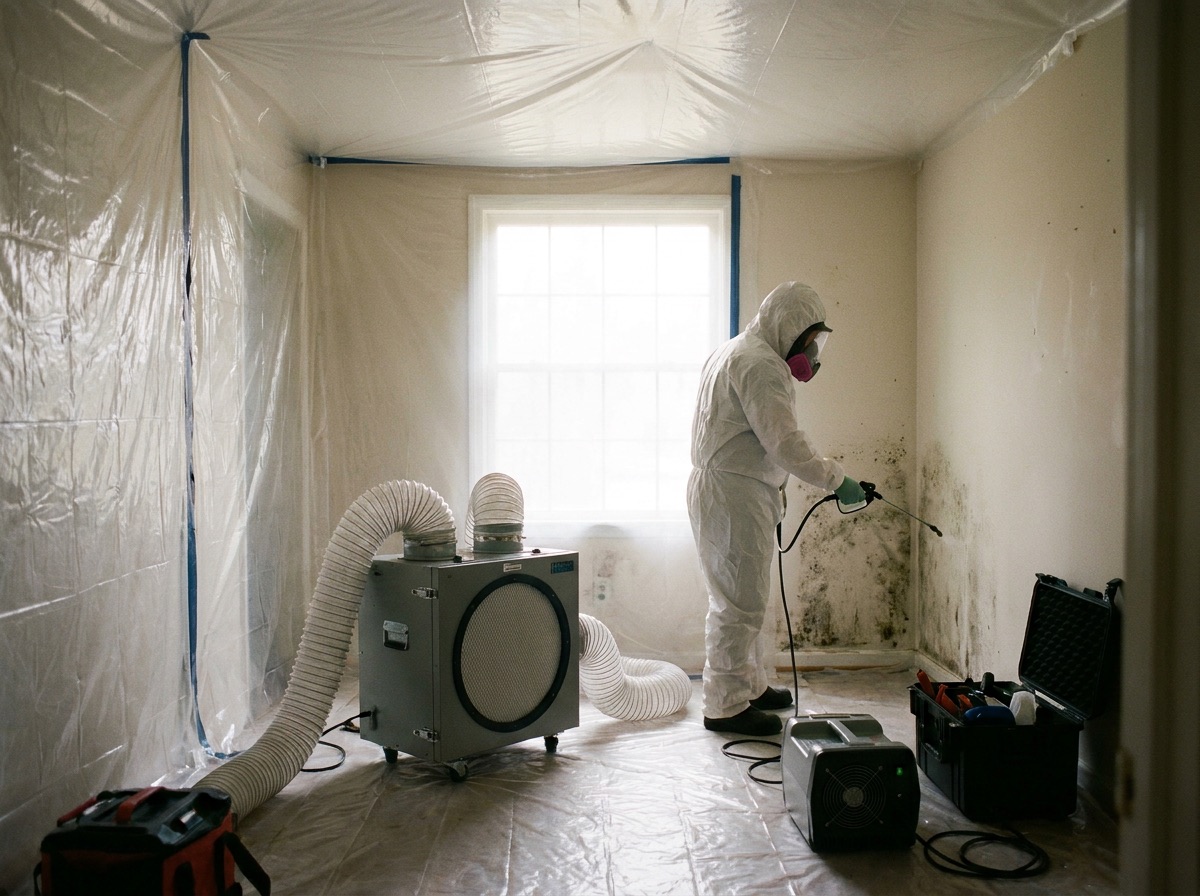
A professional mold inspection and testing engagement is a diagnostic process - its purpose is to determine whether mold is present, identify the species involved, quantify the spore load in the air, and locate the moisture source driving growth. It is distinct from remediation: an inspector does not remove mold, they assess and document it. In Florida, where year-round humidity creates perpetual mold pressure, and in Illinois, where basement condensation and ice-dam-related leaks are common seasonal sources, inspections serve both reactive and preventive functions. A qualified inspector uses moisture meters, thermal imaging, and borescopes to find hidden moisture behind walls before pulling samples. Air sampling results are compared against outdoor baseline samples to determine whether indoor spore counts are elevated beyond what the exterior environment would naturally produce. The final report drives the remediation scope and provides defensible documentation for insurance claims, real estate disclosures, and lender requirements.
When you need itSigns you need this service
- A persistent musty or earthy odor is present but no visible mold has been found
- You or family members are experiencing unexplained allergy-like symptoms (congestion, eye irritation, coughing) that improve when away from home
- A home purchase or sale is pending and the property has any history of water intrusion, flooding, or high humidity
- Visible discoloration on walls, ceilings, or grout lines is present and you need to confirm whether it is mold or another substance
- A previous water damage event occurred and you want to verify the remediation was fully effective
- Your HVAC system has a history of moisture problems or visible growth around air handler coils or ductwork
How it works
- Pre-inspection interview and visual walkthroughThe inspector documents the structure's history - known leaks, past flooding, HVAC issues, occupant health complaints - then conducts a room-by-room visual survey noting discoloration, staining, water marks, and condensation patterns. This shapes where sampling resources are targeted.
- Moisture mapping with meters and thermal imagingPin-type and non-invasive moisture meters are used on walls, ceilings, and floors to identify elevated readings. Infrared thermal cameras can reveal evaporative cooling patterns behind finished surfaces - a reliable proxy for hidden moisture without cutting open walls.
- Air sampling (spore trap or PCR)Air cassette samples are taken in problem areas and in at least one control location (typically outdoors or an unaffected room). A pump draws a measured air volume through the cassette. Lab analysis produces a spore count per cubic meter, broken down by genus, which is compared against the control sample to identify abnormal elevation.
- Surface and bulk sampling where neededIf visible growth is present, a swab or tape-lift sample is collected from the surface and sent to the lab for species identification. Bulk samples - small pieces of drywall, insulation, or flooring - are taken when inspectors need to determine whether mold has penetrated the material depth.
- Lab analysis and resultsSamples are analyzed by an accredited third-party laboratory. Standard turnaround is 24-72 hours. Rush services (same business day) typically add $50-$100 per sample. Results identify mold genus (e.g., Aspergillus, Cladosporium, Stachybotrys) and spore count.
- Written report with remediation recommendationsThe final deliverable is a written report documenting all findings, moisture readings, sample results, photographic evidence, and a scope-of-work recommendation specifying what areas require professional remediation and what moisture source repairs are needed to prevent recurrence.
What it costs
National averages in 2026 place residential mold inspection at $300-$700 for homes under 4,000 square feet, with the average around $670 including a standard number of samples. Each additional air sample adds $75-$125 in lab fees, and properties with complex layouts, crawl spaces, or suspected HVAC contamination often require more sampling points. Rush lab results and post-remediation clearance testing (performed by an independent hygienist rather than the remediating contractor) add to the total but provide documentation that carries weight with insurers and future buyers.
Mold Inspection in Aurora: questions
Do you offer mold inspection in Aurora?
Yes. We connect Aurora homeowners with vetted, licensed local pros for mold inspection & testing, with a free assessment and no obligation.
How fast can someone help with mold inspection in Aurora?
For Aurora and the surrounding Kane County area, our network pros prioritize storm work and typically respond same-day or next-day for urgent needs.
What is the difference between a mold inspection and mold testing?
An inspection is the physical assessment - the visual survey, moisture mapping, and identification of suspect areas. Testing refers specifically to the collection and laboratory analysis of air or surface samples. Many companies offer both as a combined service, but they serve different purposes: an inspection can confirm the presence and extent of mold visually, while testing quantifies spore concentrations and identifies species that may not be visible. You can have an inspection without testing, but testing without an inspection provides limited actionable information.
Can I just buy a DIY mold test kit from the hardware store?
Consumer mold test kits (petri dish gravity-settle tests) will show that mold exists in virtually any indoor environment because mold spores are ubiquitous. They cannot tell you whether spore counts are elevated beyond normal levels, what species are present, or where the source is. A professional inspection using calibrated air pumps and accredited lab analysis provides quantitative, comparable data. For decisions involving health, remediation scope, real estate, or insurance, professional testing is the appropriate standard.
Should the same company do the inspection and the remediation?
Using the same company for both creates a financial conflict of interest: the inspector recommends a scope of work that the same firm will be paid to execute. Many industrial hygienists and mold-industry guidelines recommend separating inspection and remediation. At minimum, ask that post-remediation clearance testing be performed by an independent third party. Some states do not regulate this separation, but the practical risk is obvious.
What do the air sample results actually mean?
Air sample results show spore counts per cubic meter of air, broken down by mold genus. There is no universal legal 'safe' threshold - results are interpreted by comparing indoor counts against the outdoor control sample taken the same day. As a general principle, if indoor counts of any single genus are significantly higher than outdoor counts, especially if Stachybotrys (which rarely appears in outdoor air) is present at any count indoors, remediation is typically recommended. Your inspector should walk you through the lab report in plain language.
How should I prepare my home before an inspection?
Do not run HVAC systems, air purifiers, or portable fans for at least 24 hours before the inspection - these dilute airborne spore concentrations and can produce falsely low air sample results. Do not clean or paint over visible growth before the inspection. Have any past plumbing, roofing, or water damage repair records available for the inspector to review. Normal cleaning of the rest of the home is fine.
Does a mold inspection cover HVAC ducts and air handlers?
A general mold inspection typically includes a visual check of accessible HVAC components - the air handler cabinet, coil area, and any visible duct registers. Full duct inspection requires scoping with a camera and is typically priced separately. If your concern is specifically HVAC-related mold (a common issue in Florida due to the length of cooling seasons and the condensation that forms on evaporator coils), request that the inspector specifically includes the air handler in the inspection scope.
How long does a mold inspection take?
Most residential inspections take 2-4 hours on-site, depending on the size of the home and the number of areas of concern. Homes with crawl spaces, finished basements, or multiple suspected water-damage locations take longer. Lab results typically follow within 24-72 hours, after which the inspector prepares and delivers the final written report.
Is a mold inspection required when buying or selling a home in Florida or Illinois?
Neither Florida nor Illinois mandates a mold inspection as part of a standard real estate transaction. However, Florida's disclosure law requires sellers to disclose known material defects, which includes known mold conditions. Many buyers in both states now request a mold inspection as a contingency, particularly for properties with any disclosed water history, older construction, or visible staining. Lenders on FHA and VA loans may also require mold remediation if an appraiser flags visible mold during the appraisal.
What certifications should I look for in a mold inspector?
Look for inspectors who hold IICRC AMRT (Applied Microbial Remediation Technician) certification, or who are Certified Industrial Hygienists (CIH) through the American Industrial Hygiene Association (AIHA). In Florida, mold assessors must hold a state-issued Mold Assessor license (under Florida Statute 468 Part XVI). Illinois does not currently license mold inspectors separately, making national certification credentials more important for vetting contractors there.
What happens if the inspection finds no mold?
A clean inspection result is itself valuable - it rules out mold as a cause of air quality concerns, provides documentation for a real estate transaction, and establishes a baseline for future reference. If you have ongoing health symptoms and the mold inspection is clean, the inspector may be able to identify other air quality issues (elevated VOCs, dust mite allergens, pest activity) or refer you to an industrial hygienist for a broader indoor air quality assessment.