Structural Drying & Dehumidification in Cape Coral
Commercial drying of framing, subfloor, and wall cavities to prevent mold and rot. We connect Cape Coral homeowners with vetted, licensed local pros, free.
Structural Drying in Cape Coral
Free, no obligation. We match you with up to two licensed, insured local pros so you can compare.
- Licensed pros
- Free, no spam
- One call, not eight
Got it. You are in good hands.
A vetted local pro will reach out shortly. For an active emergency, call us now at (813) 555-0911.
Cape Coral homeowners turn to structural drying & dehumidification after the storms that hit Lee County. Here is exactly what the work involves, what it costs, and how to get matched with a local pro.
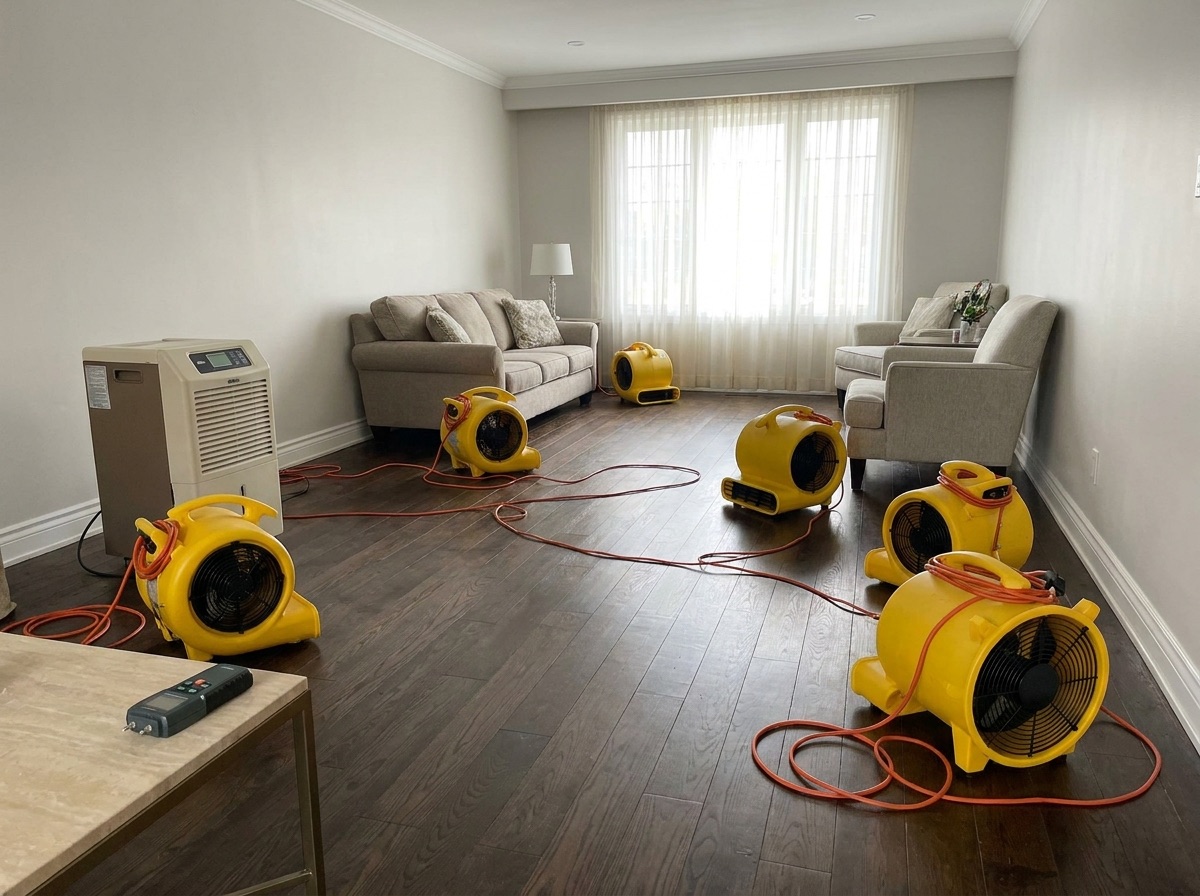
Structural drying is the controlled removal of moisture that has migrated beyond surface materials into the framing, subfloor system, wall cavities, and ceiling assemblies of a home after a water intrusion event. Unlike basic water extraction, which removes standing water, structural drying targets the moisture that wicks into plywood, dimensional lumber, drywall backer, and wall insulation - materials that can hold saturation even after visible water is gone. Certified restoration contractors follow IICRC S500 standards, deploying commercial LGR dehumidifiers rated 125-250 pints per day alongside refrigerant-cycle air movers staged at roughly one unit per 50-70 square feet of wet floor. In Florida, ambient humidity above 70% makes unassisted evaporation useless and accelerates the window to mold colonization. In Illinois, cold-weather moisture trapping inside insulated wall cavities prolongs drying cycles. The process is monitored daily with calibrated moisture meters and thermal imaging until all assemblies reach established drying goals.
When you need itSigns you need this service
- Flooring, baseboards, or drywall remain damp more than 24 hours after standing water was removed
- Moisture meter readings on subfloor or wall framing exceed 16% wood moisture content
- A musty or earthy odor persists in rooms adjacent to the water loss area
- Thermal imaging reveals cold pockets inside wall cavities indicating trapped moisture
- Hardwood floors are cupping, laminate is bubbling, or carpet padding remains spongy after extraction
- The water loss affected a multilevel structure and upper-floor water migrated through subfloor into lower ceilings
How it works
- Moisture Mapping and Category ClassificationTechnicians use penetrating moisture meters and non-invasive thermal cameras to map all affected assemblies. Water is classified as Category 1 (clean), 2 (gray), or 3 (black) - the category determines whether antimicrobial treatment and controlled demolition are required before drying begins.
- Controlled Demolition of Unsalvageable MaterialsSaturated drywall below the flood line, soaked insulation, and irreparably damaged flooring are removed to expose wet framing and allow airflow. This is not cosmetic work - leaving wet material in place traps moisture and feeds mold regardless of how many air movers are running.
- Equipment Placement per Drying PlanCommercial air movers are positioned per IICRC S500 guidelines - one mover per 10-16 linear feet of wall and one per 50-70 sq ft of wet floor. LGR dehumidifiers are staged to maintain indoor relative humidity below 50%. In closed drying systems, doors are sealed to concentrate the equipment's effect.
- Cavity Drying for Walls and SubfloorsWall cavities are accessed via small drill holes or removed base plates to inject directed airflow directly onto framing and insulation. Subfloor systems may require specialty drying mats applied to the surface to pull moisture upward without full floor removal.
- Daily Monitoring and DocumentationTechnicians return each day to log temperature, relative humidity, and moisture meter readings at each mapped location. Equipment is repositioned as wet areas migrate or diminish. Documentation is kept in a drying log that serves as evidence for the insurance file.
- Final Clearance and Equipment RemovalDrying is declared complete when all structural assemblies reach manufacturer-recommended moisture content targets - typically below 16% for wood framing. A final moisture map is produced. Only after documented clearance are reconstruction crews authorized to begin closing walls and reinstalling flooring.
What it costs
Cost is driven by three factors: total affected square footage, water category (black water requires antimicrobial treatment and adds 30-50% to baseline), and how long the structure sat wet before crews arrived. Equipment rental alone - LGR dehumidifiers run $105 or more per day each, air movers $20-$50 per day each - accounts for a large share of the bill on multi-day jobs. A typical single-room Category 1 loss runs $1,500-$3,500; a full-floor Category 2 event in a 2,000 sq ft home can reach $8,000-$15,000 when cavity access and extended drying cycles are factored in.
Structural Drying in Cape Coral: questions
Do you offer structural drying in Cape Coral?
Yes. We connect Cape Coral homeowners with vetted, licensed local pros for structural drying & dehumidification, with a free assessment and no obligation.
How fast can someone help with structural drying in Cape Coral?
For Cape Coral and the surrounding Lee County area, our network pros prioritize storm work and typically respond same-day or next-day for urgent needs.
What is the difference between water extraction and structural drying?
Water extraction uses truck-mount or portable wet-vacs to remove standing water from surfaces - it takes hours. Structural drying addresses the moisture that has already migrated into framing, insulation, drywall, and subfloor - it takes days. Skipping structural drying after extraction is one of the most common causes of mold growth weeks after a loss that appeared to be cleaned up.
How do I know if my walls are still wet after a flood?
A surface that looks and feels dry can still hold significant moisture deeper in the assembly. Restoration contractors use penetrating moisture meters that measure wood and drywall moisture content at depth, along with thermal cameras that identify temperature differentials caused by evaporative cooling in wet areas. A reading on drywall above 1% or on wood framing above 16-19% generally indicates active drying is still required.
How many days does structural drying typically take in Florida?
Florida's ambient humidity - regularly above 70-80% in summer - means that unassisted drying is essentially impossible and slows even equipment-assisted drying compared to drier climates. A Category 1 loss in a Florida home typically takes 3-5 days with proper equipment. Category 2 or 3 losses, or losses in homes with foam insulation that traps moisture, can run 7-10 days or longer.
Does structural drying prevent mold entirely?
Rapid structural drying dramatically reduces mold risk, but it is not a guarantee if the response was delayed. Mold colonization can begin on wet wood and drywall within 24-48 hours under the right temperature and humidity conditions. If water sat for more than 48-72 hours before crews arrived, mold testing or antimicrobial treatment may be warranted alongside the drying process regardless of final moisture readings.
Do I need to move out during structural drying?
For most single-room or single-floor losses, temporary relocation is not required. The equipment is loud (air movers produce 65-75 dB) and the dehumidifiers produce heat, so affected rooms are generally unusable during the drying cycle. For whole-floor or whole-house losses where multiple rooms are sealed and humidity is being aggressively controlled, temporary relocation is common and some policies include additional living expense coverage for this situation.
What happens if structural drying is skipped or done improperly?
Retained moisture in framing and subfloor creates ideal conditions for mold, which can colonize unseen inside wall cavities. The resulting remediation - mold testing, controlled demolition, and antimicrobial treatment - typically costs substantially more than the original drying job would have. In severe cases, rot in structural framing can develop within weeks, turning a water damage claim into a structural repair project.
Will my homeowner's insurance cover structural drying?
Most standard homeowner's policies cover sudden and accidental water losses - a burst pipe, storm-driven roof leak, or appliance failure - and structural drying is considered a covered mitigation expense under those events. Gradual leaks or flooding from external groundwater are typically excluded or require separate flood coverage. Documenting the timeline and cause of loss from the start is important for a clean claim. A restoration contractor should provide a full drying log and moisture mapping report to support the file.
What does IICRC S500 certification mean and why does it matter?
The IICRC S500 is the industry standard for professional water damage restoration, published by the Institute of Inspection, Cleaning and Restoration Certification. It defines water categories, drying goals, equipment ratios, documentation requirements, and protocols for contaminated losses. Hiring a contractor who follows S500 standards means the drying plan is based on science rather than guesswork, and the drying log produced is defensible for insurance and legal purposes.
Can structural drying equipment damage my home?
Properly staged equipment does not damage intact materials. The concern runs the other direction - directing concentrated airflow into an already weakened drywall assembly can cause surface paper to bubble or delaminate. Experienced technicians assess material condition before equipment placement and adjust when necessary. Heat buildup from dehumidifiers is real but manageable; technicians monitor indoor temperatures and ventilate where needed to prevent secondary issues.
Is structural drying different for a slab-on-grade home versus a home with a crawl space?
Yes, meaningfully so. In a slab-on-grade home, moisture migration is largely contained to above-slab assemblies - subfloor, wall plates, and lower wall cavities - making equipment placement more straightforward. In a crawl space home, moisture can move both upward into the floor system and laterally through the crawl space itself, often requiring a separate drying setup below the floor. Florida has a significant number of both construction types; Illinois homes with basements present yet another configuration where below-grade moisture dynamics are different again.