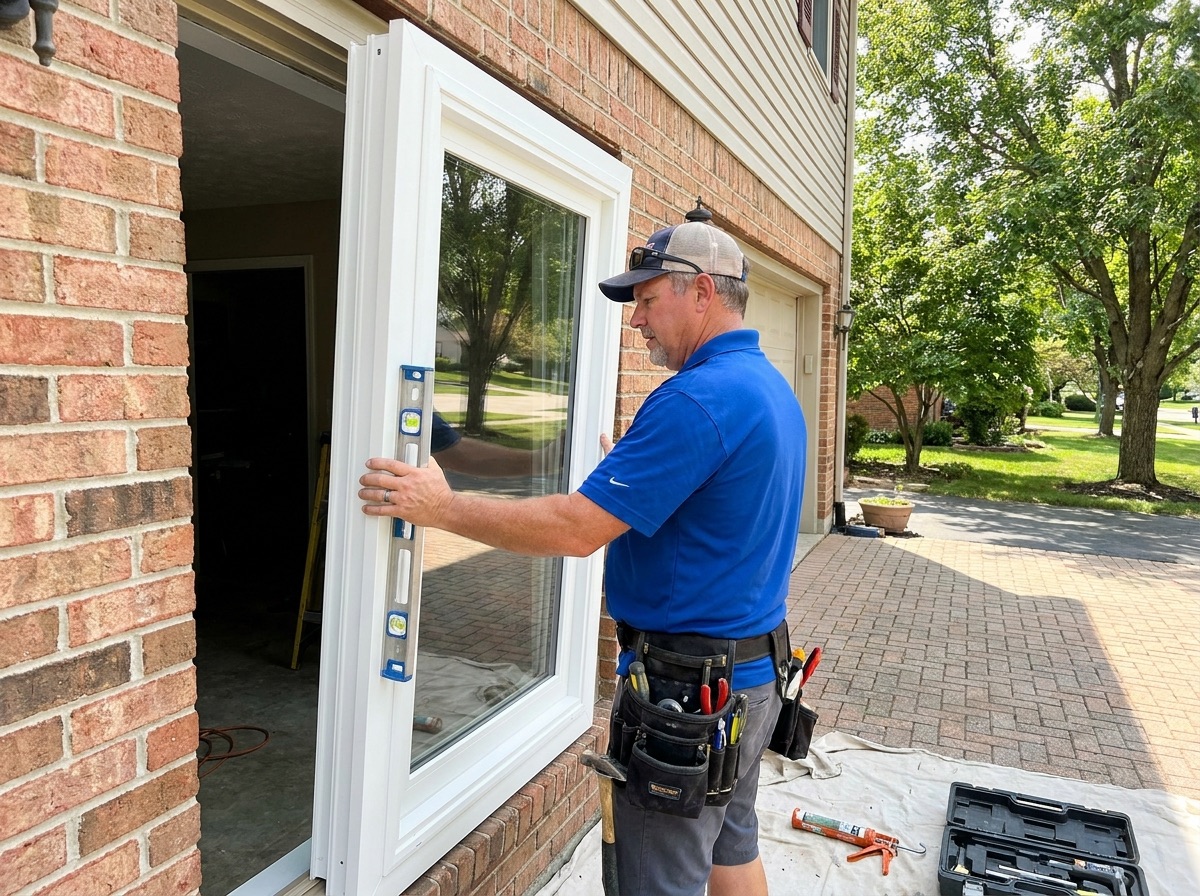
Impact Door Installation in Fort Lauderdale
Installation of impact-rated entry and patio doors. We connect Fort Lauderdale homeowners with vetted, licensed local pros, free.
Impact Doors in Fort Lauderdale
Free, no obligation. We match you with up to two licensed, insured local pros so you can compare.
- Licensed pros
- Free, no spam
- One call, not eight
Got it. You are in good hands.
A vetted local pro will reach out shortly. For an active emergency, call us now at (813) 555-0911.
Fort Lauderdale homeowners turn to impact door installation after the storms that hit Broward County. Here is exactly what the work involves, what it costs, and how to get matched with a local pro.
Impact door installation replaces a home's entry and patio door openings with units engineered to resist wind-borne debris impact and sustained wind pressure loads required by the Florida Building Code. Unlike a shutter system placed in front of an existing door, an impact-rated door integrates protection directly into the opening - the door itself becomes the storm barrier. Entry doors typically use laminated impact glass lites in a heavy-gauge aluminum or fiberglass frame anchored with an engineered fastener pattern into the wall substrate. Patio French doors and multi-panel bifold configurations follow the same glazing standard with frame systems designed for wider spans. In Miami-Dade and Broward High-Velocity Hurricane Zones, every replacement door must carry a valid Notice of Acceptance (NOA). In other Florida counties, Florida Product Approval is required. Installation involves removal of the existing door and frame, rough-opening inspection and repair as needed, setting and anchoring the new unit, flashing, sealing, and a county inspection.
When you need itSigns you need this service
- Your entry or patio door is a standard hollow-core, fiberglass, or wood unit with no impact glazing certification - the most common situation in Florida homes built before the early 2000s
- An existing impact door has frame damage, delaminating glass lites, failed weatherstripping, or hardware that no longer locks fully
- Your home was recently re-roofed or re-inspected and the wind mitigation report identified non-rated doors as the reason opening protection credit was denied
- You are adding or enlarging a patio opening as part of a renovation and need an impact-rated unit to satisfy the building permit
- A storm event bent, bowed, or forced a door out of its frame, breaking the weather seal even if the door still closes
- You are converting a home to rental or resale and the inspector or buyer's agent identified non-code-compliant doors as a deficiency
How it works
- Opening Assessment and Product SpecificationA licensed contractor measures the rough opening, confirms wall construction (CBS block, wood frame, or steel stud), and determines the local design wind pressure and missile impact category for the installation address. They specify a Florida Product-Approved or NOA-compliant door unit with the correct frame anchor pattern for the substrate.
- Permit ApplicationThe contractor submits permit drawings referencing the product approval or NOA documentation, the anchor schedule, and a site plan. Door installation permits in Florida typically require a threshold agreement (for entry doors) and confirmation that the product is rated for the local design wind speed. Permit fees and timelines vary by county.
- Existing Door and Frame RemovalThe existing door, frame, and threshold are removed. The contractor inspects the rough opening framing for water damage, rot, or deterioration of the buck or subsill. Damaged framing is repaired before the new unit is set - a non-negotiable step because frame anchors perform to specification only in sound substrate.
- Buck Installation or Rough-Opening PreparationIn concrete block construction, a pressure-treated or composite buck (a wood frame set into the masonry opening) is installed and anchored if not already present. In wood-frame construction, the rough opening is shimmed and plumbed. In both cases, a water-resistive barrier is integrated at the sill and jambs before the door unit is set.
- Door Unit Setting, Anchoring, and FlashingThe impact door unit is lifted into the opening, shimmed plumb, level, and square, then anchored with the specified fastener size and spacing from the product approval documentation. All perimeter joints are flashed with self-adhering membrane and finished with approved sealant at exterior face. Interior jamb trim and exterior casing are installed.
- Hardware Installation, Testing, and InspectionDeadbolts, multi-point locks, or threshold closers are installed. The door is opened, closed, locked, and inspected for smooth operation and weatherstrip compression on all four sides. The county inspector verifies fastener patterns, product approval documentation, and flashing compliance. The homeowner receives the closed permit and NOA/FPA documentation.
What it costs
A single impact entry door installed in Florida typically runs $1,500-$2,500 for a standard aluminum-frame unit with impact glass lites; upgraded fiberglass doors with decorative glass and multi-point locks range $2,000-$3,500. Double entry doors (French-door configuration) run $2,800-$6,000 installed, and custom or architectural double doors with decorative impact glass reach $6,500-$10,000+. Labor adds $800-$2,000 per opening depending on rough-opening condition and wall type. Miami-Dade and Broward HVHZ installations carry a cost premium of 15-25% over other Florida markets due to the stricter NOA product requirements and permit complexity. Homes with multiple non-rated doors (entry, patio slider, secondary entry) typically price a full-door package at $8,000-$20,000 including all openings.
Impact Doors in Fort Lauderdale: questions
Do you offer impact doors in Fort Lauderdale?
Yes. We connect Fort Lauderdale homeowners with vetted, licensed local pros for impact door installation, with a free assessment and no obligation.
How fast can someone help with impact doors in Fort Lauderdale?
For Fort Lauderdale and the surrounding Broward County area, our network pros prioritize storm work and typically respond same-day or next-day for urgent needs.
What makes a door 'impact-rated' - what exactly is being tested?
An impact-rated door must pass two distinct test protocols: a large-missile impact test and a cyclic wind-pressure test. The large-missile test fires a 9-pound 2x4 lumber piece at the door at 50 feet per second - simulating wind-borne debris - and the glazing must not be fully penetrated. The cyclic pressure test then applies thousands of positive and negative pressure pulses to the same unit to simulate sustained hurricane wind loading. Only units that pass both tests without structural failure receive product approval. The door frame, glass, hardware, and anchoring system are all tested as an integrated unit - you cannot mix-and-match components from different approved products.
Can I keep my existing door and add a storm panel in front of it instead?
Yes - a permitted accordion or panel shutter system installed over an existing non-impact door is a valid approach to achieve opening protection credit. It is typically less expensive upfront than a full impact door replacement and may be appropriate for secondary openings or tighter budgets. The trade-off is operational: shutters must be deployed before a storm (and removed or stowed after), and permanent shutters add visual weight to entry facades. Impact door replacement provides always-on protection with no pre-storm action required and often increases home value more directly than shutter systems.
What is the difference between an impact door and a hurricane-rated door?
These terms are used interchangeably in the Florida market but refer to the same certification. An impact door, hurricane door, or hurricane-rated door all describe a unit that has passed the large-missile impact and cyclic pressure tests described in the Florida Building Code, referenced through ASTM E1886/E1996 or the Miami-Dade TAS 201/202/203 test protocols. What matters is the product's Florida Product Approval number or NOA - not the marketing label on the brochure. Always ask the contractor for the FPA number or NOA and verify it covers the design wind speed for your address.
How long does it take to get a new impact door after ordering?
Most standard-size aluminum impact entry doors have lead times of 3-8 weeks from a Florida distributor. Fiberglass doors with decorative glass configurations, double-door units, and non-standard sizes require factory fabrication and typically run 6-12 weeks. Custom architectural doors with specialty glass patterns can take 10-16 weeks. Lead times for all products lengthen significantly - sometimes doubling - in the months following a major storm event when demand across South Florida surges. Placing orders before hurricane season (before June) or immediately after a storm for replacement units is advisable.
Do impact doors require a threshold and why does it matter?
Yes. Florida Building Code requires a sealed threshold at the base of all exterior doors, and impact door units include a threshold assembly designed to integrate with the door panel and weatherstrip to create a continuous perimeter seal. The threshold is also a structural element - it anchors the door sill and transfers wind loads to the floor framing. A missing, damaged, or improperly installed threshold compromises both the wind performance and the water infiltration resistance of the installation. County inspectors verify threshold condition and integration as part of the door installation inspection.
Will an impact door eliminate my need for a hurricane shutter on that opening?
Yes. A properly permitted and inspected impact door satisfies opening protection requirements for that opening - no additional shutter is needed. This is one of the primary reasons homeowners choose impact doors over shutter systems for entry and patio openings: the protection is always engaged, requires no pre-storm deployment action, and presents no visual disruption when storms are not imminent. However, for maximum wind mitigation insurance credit, all openings in the home must be rated - replacing one door but leaving non-rated windows will yield partial or no opening protection credit depending on your insurer's rating method.
What frame material is best for a Florida impact door - aluminum or fiberglass?
Aluminum frames are the dominant choice in Florida for impact doors and are standard in commercial and multi-family construction. They are dimensionally stable in heat, resist warping, and are available in a wide range of powder-coat colors and finishes. The thermal conductivity of aluminum is higher than fiberglass (meaning less insulation), though thermal-break aluminum frames mitigate this. Fiberglass frames offer better thermal performance, resist salt-air corrosion extremely well, and can be painted or stained to mimic wood - making them popular for higher-end residential applications where aesthetics and energy performance are priorities. Both materials are available in code-compliant, impact-rated configurations.
Can an impact door be installed in a block or masonry wall without a wood buck?
Yes, some impact door products are designed for direct masonry anchoring without a wood buck - the frame is anchored directly into the CMU block or poured concrete using heavy masonry screws or epoxy anchors at the prescribed spacing. However, most Florida residential installations use a pressure-treated or composite wood buck set into the masonry opening as an anchoring substrate. The choice depends on the specific product approval and the contractor's assessment of the substrate condition. In both cases, the anchor type, size, embedment depth, and spacing are specified in the product approval documentation and must be followed exactly - deviations can void the approval and cause inspection failure.
How does impact door installation affect energy efficiency?
Impact doors with laminated glass lites reduce solar heat gain compared to standard clear glass doors due to the tinting or low-e coatings available on most impact glazing products. The continuous perimeter weatherstrip and sealed threshold system on a properly installed impact door also significantly reduces air infiltration compared to aged standard doors with deteriorated seals. In Florida's cooling-dominated climate, reduced solar heat gain and air infiltration directly reduces air conditioning load. Some impact glass configurations qualify for energy-efficiency tax credits under current federal incentive programs - confirm current availability with a tax professional.
What maintenance does an impact door require in Florida's climate?
Annual maintenance keeps impact doors performing correctly for 20-30 years. Rinse aluminum frames with fresh water every few months to remove salt-air deposits, particularly in coastal locations within a few miles of the ocean. Lubricate multi-point lock mechanisms and hinges with a dry silicone spray - not WD-40, which attracts dust and degrades seals. Inspect weatherstrip on all four sides annually and replace sections that are cracked, compressed flat, or pulling away from the frame. Check the threshold seal and re-apply sealant at exterior perimeter joints every 2-3 years. Test the full lock engagement at least once before hurricane season.