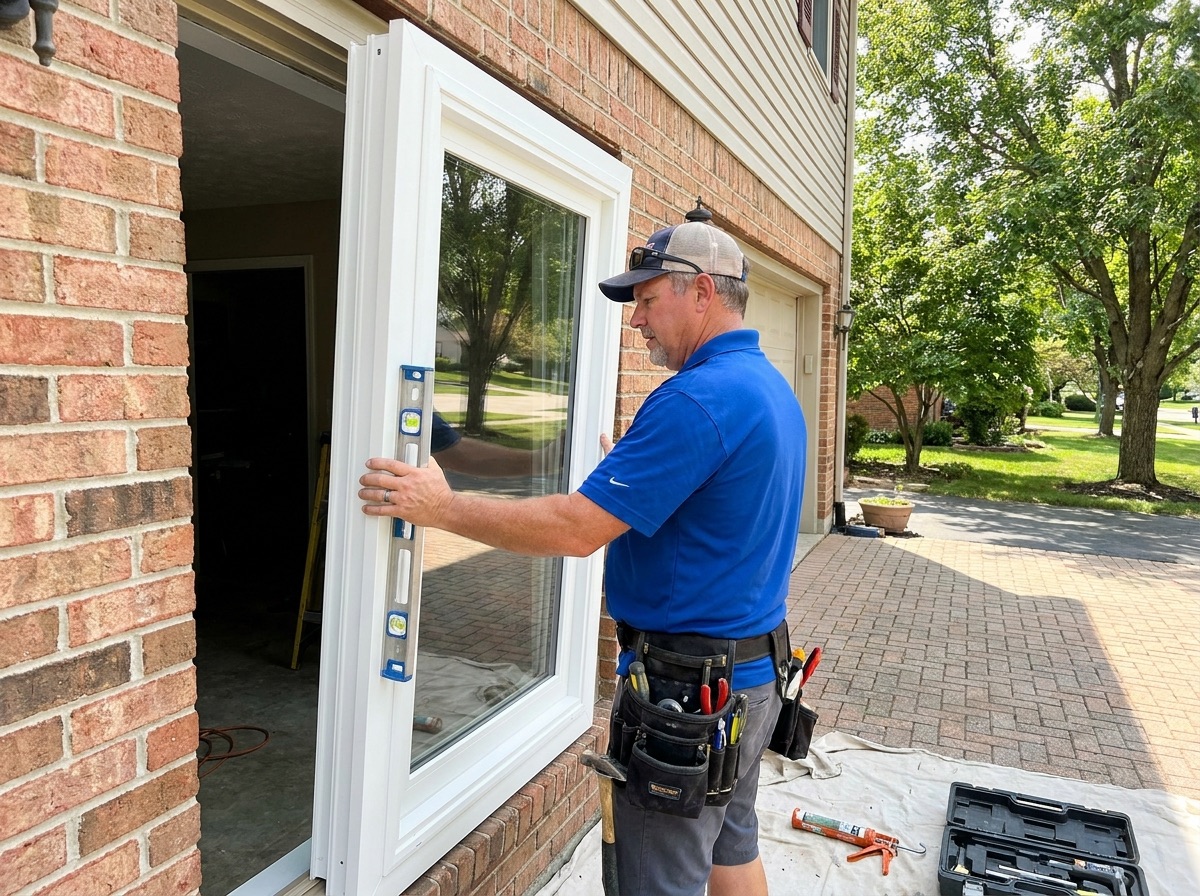
Impact Window Installation in Miami
Installation of code-rated impact-resistant windows. We connect Miami homeowners with vetted, licensed local pros, free.
Impact Windows in Miami
Free, no obligation. We match you with up to two licensed, insured local pros so you can compare.
- Licensed pros
- Free, no spam
- One call, not eight
Got it. You are in good hands.
A vetted local pro will reach out shortly. For an active emergency, call us now at (813) 555-0911.
Miami homeowners turn to impact window installation after the storms that hit Miami-Dade County. Here is exactly what the work involves, what it costs, and how to get matched with a local pro.
Impact window installation replaces standard glazing with laminated, code-rated assemblies engineered to resist high-velocity wind pressure and debris penetration without breaching the building envelope - the defining vulnerability during hurricanes. A properly specified impact window consists of two panes of glass bonded by a polyvinyl butyral or ionoplast interlayer; if the outer pane cracks under impact, the interlayer holds the assembly in place, preventing pressurization of the interior that causes catastrophic roof and wall failures. In Florida, every impact window must carry either a Florida Product Approval number valid under the Florida Building Code (FBC) or, in Miami-Dade and Broward counties, a Notice of Acceptance (NOA) from the Miami-Dade Building Code Compliance Office - the most stringent residential glazing standard in the United States. Installation is not a cosmetic upgrade; it is a structural modification requiring a building permit, inspected rough opening preparation, and licensed installation by a contractor holding a Florida state license. As of 2026, aluminum-frame impact windows have increased 8-15% in cost due to aluminum tariff adjustments, making vinyl-frame alternatives a more cost-competitive option for many homeowners outside the HVHZ.
When you need itSigns you need this service
- Existing windows were damaged, shattered, or breached during a named storm or severe weather event
- Home has standard single-pane or non-impact double-pane windows that do not meet current FBC wind-borne debris region requirements
- Homeowner is replacing more than 25% of the home's glazed openings within a 12-month period, triggering FBC compliance requirement for all new openings
- Property is in Miami-Dade or Broward HVHZ and lacks NOA-rated fenestration
- Homeowner wants to eliminate the need to deploy and store hurricane shutters before each storm season
- Property qualifies for the My Safe Florida Home program matching grant and homeowner wants to maximize the $10,000 state match toward hurricane mitigation
How it works
- Window specification and product selectionThe contractor measures each rough opening, determines the applicable wind-zone design pressure rating required by the FBC for that specific county and exposure category (B, C, or D based on terrain), and selects windows carrying a Florida Product Approval or HVHZ NOA that meets or exceeds that design pressure. Frame material - aluminum, vinyl, or fiberglass - is selected based on budget, aesthetic preference, and coastal salt-air exposure requirements.
- Permit application and approvalThe licensed contractor submits a building permit application to the local building department with product approval documentation, site-specific drawings showing rough opening dimensions and anchor patterns, and the Florida Registered Product Approval number or NOA. Approval typically takes 1-3 weeks. No installation begins before permit issuance - unpermitted impact window installation voids product approval and creates resale and insurance complications.
- Existing window removal and rough opening preparationExisting windows and frames are removed carefully to avoid damaging the structural rough opening framing or masonry buck. The opening is inspected for rot, corrosion, or structural deficiencies in the sill, header, and jambs. Any deteriorated framing is replaced and the rough opening is shimmed and squared to the manufacturer's dimensional tolerances before the new window is set.
- Window installation and anchoringThe impact window assembly is set into the prepared opening and anchored according to the approved installation instructions - which specify anchor type, diameter, embedment depth, and spacing pattern for the specific product and substrate (wood framing versus concrete masonry unit versus poured concrete). Proper anchor pattern compliance is inspected during the building department inspection; non-compliant anchor placement can invalidate the product's wind-load rating.
- Flashing, sealing, and weatherproofingSelf-adhering flashing tape is applied at the sill and sides per the product's installation requirements, creating a continuous moisture barrier. Exterior perimeter is caulked with a code-compliant elastomeric sealant approved for the window's frame material. Interior trim is finished to match existing millwork.
- Building department inspection and certificate of completionThe contractor schedules a final inspection with the local building department. The inspector verifies product approval numbers on the installed windows, reviews anchor patterns, checks flashing, and signs off the permit. The homeowner receives a certificate of completion, which is the document needed to notify the insurance carrier and request the applicable premium discount.
What it costs
Per-window installed costs in Florida range from $900 to $2,500, with South Florida averages running higher due to elevated labor rates and HVHZ specification requirements. Vinyl-frame windows are typically $200-$400 less per opening than aluminum-frame equivalents and have seen lower cost increases in 2026 due to domestic vinyl production. Whole-home projects of 15-20 windows typically land between $18,000 and $45,000 depending on window count, size, frame material, and whether any rough openings require structural remediation. The My Safe Florida Home program offers a 2:1 state match up to $10,000 for qualifying installations, effectively reducing out-of-pocket cost by up to one-third for eligible homeowners.
Impact Windows in Miami: questions
Do you offer impact windows in Miami?
Yes. We connect Miami homeowners with vetted, licensed local pros for impact window installation, with a free assessment and no obligation.
How fast can someone help with impact windows in Miami?
For Miami and the surrounding Miami-Dade County area, our network pros prioritize storm work and typically respond same-day or next-day for urgent needs.
What is a Florida Product Approval and why does my window need one?
A Florida Product Approval is a state-level certification issued by the Florida Building Commission confirming that a specific window product - identified by manufacturer name, product line, and model number - has been tested to meet the structural and impact-resistance requirements of the Florida Building Code for specified design pressure ratings. Every impact window installed in Florida must carry a valid Product Approval number. In Miami-Dade and Broward's High Velocity Hurricane Zone, a stricter Miami-Dade Notice of Acceptance (NOA) is also required. Installing a window without the correct certification for your zone renders it non-compliant even if it is physically similar to a compliant product.
What is the 25% rule in Florida, and how does it affect my project?
Under the Florida Building Code, if you replace more than 25% of your home's glazed openings - windows plus glass doors - within any rolling 12-month period, all new openings installed during that period must meet the current FBC impact protection or opening protection requirements for your wind zone. This applies even in parts of Florida outside the formal wind-borne debris region. The rule is designed to prevent partial upgrades that leave a home structurally compromised. If your project will approach or exceed the 25% threshold, your contractor should plan the scope to address the full compliance requirement rather than create a situation where a second round of permits is required months later.
How much can I expect my homeowner's insurance premium to decrease after impact window installation?
Premium reductions vary by insurer and by how comprehensively the home's opening protection is completed. In Florida, replacing all glazed openings with code-compliant impact windows typically yields a wind mitigation credit that reduces the wind portion of a homeowner's premium - which in coastal and South Florida markets is often the largest component of the total premium. Wind mitigation credits for complete opening protection (all windows, doors, and skylights rated) range from 20% to 45% on the wind premium in many cases, though exact figures require a licensed wind mitigation inspector to document the installation and submit a mitigation report to the insurer. [DATA NEEDED for specific average dollar amounts by county.]
What is the difference between impact windows and hurricane shutters?
Hurricane shutters are temporary protective panels - aluminum accordion shutters, roll-down systems, or removable panels - installed over standard windows to provide storm protection. They require deployment before a storm and removal afterward, and the standard glass beneath them remains in place and can still fail if the shutter is not fully engaged. Impact windows replace the entire glazing assembly with a permanently installed laminated unit that requires no deployment - it is always active. Impact windows also provide year-round benefits including reduced UV transmission, noise reduction, and improved energy efficiency. The lifecycle cost of impact windows is typically lower than maintaining and operating a full shutter system when the insurance premium reduction is factored in.
What happens to the window if it is hit by debris? Does the entire unit need to be replaced?
If the outer pane of an impact window is struck and cracked by debris, the inner interlayer holds the assembly together and maintains the weather barrier. The window has done its job - but it must be replaced because the damaged outer pane no longer provides the rated impact resistance for the next storm. A single-pane break does not necessarily mean both panes need replacement; some manufacturers offer outer-lite replacement programs. However, until the window is restored to its original specification, it should be treated as a non-rated opening and covered with temporary protection during any storm threat.
Can impact windows be installed in concrete block homes, which are common in Florida?
Yes. Concrete masonry unit (CMU) construction is the dominant residential building method in Florida, and impact window products are specifically tested and approved for CMU installation. The anchor pattern and fastener specifications differ from wood-frame installation: concrete anchors with specific embedment depths into the masonry buck or filled block are required. The product's Florida Product Approval documentation includes separate installation instructions for CMU substrates, and the building department inspector will verify compliance with those specifications during the final inspection.
What is the My Safe Florida Home program and how do I apply?
My Safe Florida Home (MSFH) is a state-funded program that provides free wind mitigation inspections and matching grants for qualifying hurricane mitigation improvements, including impact windows and doors. The program provides a 2:1 state match - for every $1 the homeowner spends on qualifying improvements, the state contributes $2 - up to a maximum state contribution of $10,000. To participate, the homeowner requests a free inspection through the MSFH program, receives a report identifying recommended improvements, applies for the grant, and then hires a licensed contractor to perform the work. Eligibility and funding availability are subject to state budget appropriations; check the current program status at the Florida Department of Financial Services website as funding rounds open and close periodically. [DATA NEEDED for current 2026 funding round status.]
How long does the permit process take and can I start installation before permit approval?
Permit approval for impact window installation in most Florida jurisdictions takes 1-3 weeks for residential projects. Some counties offer expedited review for storm-damage emergency permits, which can shorten this to 3-7 business days. Installation must not begin before the permit is issued - starting work without a permit risks a stop-work order, requires permit-after-the-fact processing (which is more expensive and not guaranteed), and voids the product's Florida Product Approval because uninspected installation cannot be verified for code compliance. A contractor who offers to start immediately without a permit is a red flag.
Are there vinyl-frame impact windows that meet HVHZ requirements?
Yes. Several vinyl-frame impact window lines carry Miami-Dade NOA certification, which is the most stringent standard and supersedes standard FBC Product Approval. Vinyl frames offer cost advantages of $200-$400 per window over aluminum alternatives and have seen smaller price increases in 2026 because domestic vinyl extrusion is less affected by aluminum import tariffs. The tradeoff is that some large-opening sizes may not be available in vinyl at the required design pressures, making aluminum the only specification-compliant option for oversized openings or very high design-pressure requirements in exposed coastal locations.
What should I look for when vetting impact window contractors in Florida?
Verify the contractor holds an active Florida state license - either a roofing contractor license is insufficient for window installation; a building contractor, general contractor, or specialty window and door contractor license is required. Confirm they pull permits in their own name (not yours - homeowner-pulled permits eliminate contractor liability). Ask for the Florida Product Approval number for the specific window being proposed before signing a contract, and verify it independently at the DBPR product approval search at floridabuilding.org. Check for active general liability and workers' compensation insurance. Get at minimum three itemized bids, and be cautious of any quote more than 20% below the others without a clear explanation for the difference.