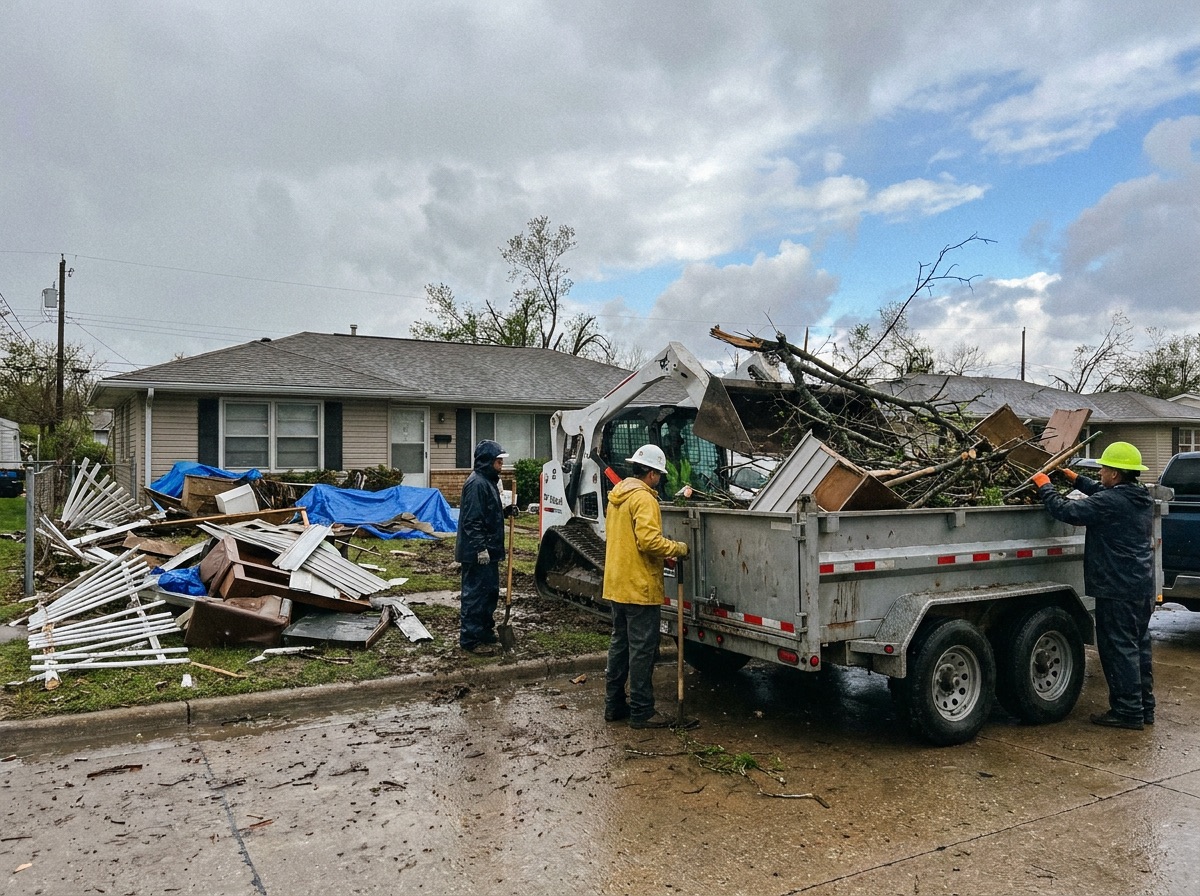
Yard Debris Cleanup in Orlando
Clearing of scattered yard debris after a storm. We connect Orlando homeowners with vetted, licensed local pros, free.
Yard Cleanup in Orlando
Free, no obligation. We match you with up to two licensed, insured local pros so you can compare.
- Licensed pros
- Free, no spam
- One call, not eight
Got it. You are in good hands.
A vetted local pro will reach out shortly. For an active emergency, call us now at (813) 555-0911.
Orlando homeowners turn to yard debris cleanup after the storms that hit Orange County. Here is exactly what the work involves, what it costs, and how to get matched with a local pro.
Yard debris cleanup removes the scatter of branches, leaves, shredded vegetation, displaced mulch, small limbs, and miscellaneous material that storms deposit across lawns, beds, driveways, and pool decks. It is the most common post-storm service Florida and Illinois homeowners need, because even storms that spare the structure leave the yard heavily littered. The work is labor-intensive rather than equipment-intensive: crews use rakes, blowers, tarps, and haul-away trucks to gather and remove material from every surface. In Florida, tropical storms and hurricanes deposit particularly high volumes because of the density of subtropical vegetation - palm fronds, large oak limbs, and stripped foliage from landscaping. In Illinois, derecho and severe thunderstorm events scatter hardwood limbs, bark, and stripped leaves across wide areas. Volume, lot size, and debris density are the primary cost drivers, and most companies quote by the hour or by the cubic yard of material removed.
When you need itSigns you need this service
- Storm left branches, limbs, palm fronds, or heavy leaf scatter across the entire yard
- Debris is covering the pool deck, lanai, or outdoor living areas after a storm
- Scattered mulch, bark, and small limbs are covering turf and suffocating grass
- Debris has washed into storm drains, gutters, or drainage swales on the property
- HOA or city ordinance requires post-storm cleanup within a set number of days
- Storm knocked down or damaged garden structures, leaving broken stakes, netting, or lightweight material scattered across the yard
How it works
- Property walkthrough and volume estimateCrew lead walks the entire lot to assess debris density, identify any hazardous material mixed in (e.g., nails from shingle blow-off, glass, or downed wire), and determine whether any debris requires segregation. This sets the crew size, time estimate, and whether a chipper or haul-away truck is needed versus hand-loading onto a trailer.
- Hazard material identification and removalAny material that cannot go into a standard green waste stream - broken glass, metal fasteners, chemical containers, or damaged electrical fixtures - is flagged and removed separately before general debris collection begins. In Florida especially, sharp debris from pool cage screen frames and roofing is common after storms and requires careful handling.
- Leaf blowing and raking into staging pilesBackpack blowers clear debris from hard surfaces - driveways, decks, pool surrounds, walkways. Rakes gather debris from turf and beds. Material is staged into centralized piles positioned for efficient loading, typically near the driveway or street edge. Large limbs are staged separately from fine debris.
- Loading and removalFine debris and leaves are fork-loaded or raked onto tarps and moved to the haul truck or trailer. Limbs up to 4-6 inches diameter go through the chipper if one is on-site, or are hand-loaded for transport. The crew moves systematically across the property to avoid double-handling material.
- Drainage and gutter clearanceDebris packed into surface drains, swales, or downspout outflows is cleared to prevent flooding during subsequent rain. This is a quick step but an important one - a blocked surface drain left after a storm can cause standing water and secondary damage during the next rain event.
- Final blowdown and inspectionOnce the main debris is removed, the crew does a final blowdown of hard surfaces and a visual pass of the turf and beds to confirm the property is clear. Any debris piles are checked that they were fully loaded. Sign-off is completed with the homeowner or their representative.
What it costs
Yard debris cleanup is priced primarily by labor hours and haul volume. Most companies charge $50-$100 per crew member per hour, and a typical residential lot takes a crew of two to three roughly two to four hours - putting most jobs in the $200-$600 range. Heavier debris from large limbs or palm fronds, or high-density scatter on larger properties, pushes the job past the four-hour mark and adds disposal weight. Some contractors offer flat-rate lot pricing for standard sizes; per-cubic-yard pricing is more common on larger or commercial properties. Post-storm demand pricing is real in Florida after major storm events and can push rates up 30-50% in the first few days.
Yard Cleanup in Orlando: questions
Do you offer yard cleanup in Orlando?
Yes. We connect Orlando homeowners with vetted, licensed local pros for yard debris cleanup, with a free assessment and no obligation.
How fast can someone help with yard cleanup in Orlando?
For Orlando and the surrounding Orange County area, our network pros prioritize storm work and typically respond same-day or next-day for urgent needs.
What is the difference between yard debris cleanup and fallen tree removal?
Yard debris cleanup addresses scattered material - branches, leaves, fronds, small limbs, and general vegetative litter - that can be handled with rakes, blowers, and hand-loading. Fallen tree removal addresses intact trees or large trunk sections that require chainsaws, chippers, and sometimes heavy equipment to process. A job that starts as yard debris cleanup can escalate to fallen tree removal pricing if large sections of trunk are present. When requesting a quote, describe any limb diameters over four inches so the contractor can send the right crew and equipment.
Can I put storm yard debris at the curb in Florida for free municipal pickup?
After a declared disaster, many Florida municipalities activate emergency yard waste collection from the curb - typically for vegetative debris only, meaning branches, fronds, and leaves, not structural material. This service is usually free but has specific placement rules: debris must be in a pile (not bagged), kept separate from household trash and recycling, and positioned within the right-of-way rather than on the pavement itself. Check your specific county or city emergency management page for current program status and placement guidelines after each storm.
How much yard debris typically comes from a single Florida tropical storm?
A moderate tropical storm hitting a typical quarter-acre Florida residential lot with mature trees and landscaping can generate 10-30 cubic yards of vegetative debris - roughly one to three full truckloads. A major hurricane with high winds can generate substantially more, particularly in areas with large oaks, pines, or palms. Lots with mature canopy trees consistently generate more debris than recently landscaped properties.
Should I bag debris before the crew arrives or leave it scattered?
Leave it scattered unless the contractor specifically requests otherwise. Bagging fine debris takes significant homeowner time and often makes the job less efficient because bags are slower to load than loose material raked directly onto a tarp. The exception is if you are waiting for municipal curbside pickup - many programs require unbagged vegetative material in a pile rather than individual bags, which can take longer for the collection vehicles to process.
Will the cleanup crew handle debris in my pool or on my pool deck?
Pool deck debris - fronds, branches, small limbs, leaf scatter - is typically included in yard cleanup scope. Debris that has fallen into the pool itself is usually outside the scope of a debris cleanup crew and requires a pool service company to vacuum and filter properly, since wet organic debris in a pool affects water chemistry and can clog pool equipment. Clarify with your contractor whether pool deck only or pool interior is included before the job starts.
How do I prepare my yard before the cleanup crew arrives?
Move vehicles out of the driveway if possible so the crew can park a haul truck close to the work area. Secure any animals. If you have materials in the yard you want to keep - salvageable lumber, landscaping stones, portable furniture - move them to a clearly separated area and tell the crew lead what to leave alone. If you know there is broken glass or metal from the storm, flag those areas so the crew handles them carefully.
Does yard debris cleanup include mulch replacement after debris removal?
No - debris removal and mulch installation are separate services. Removal takes scattered and damaged mulch away along with the rest of the debris. If you want fresh mulch reinstalled in your beds after cleanup, that is a landscaping job done separately. Some contractors offer a bundle, but it is a separate line item. Ask about it at estimate time if you want to address it in one visit.
What if there are nails, screws, or roofing material mixed in with my yard debris in Illinois?
Mixed debris containing fasteners, shingle granules, or construction material is common in Illinois after severe hail and wind events. Tell the contractor upfront so they bring magnet rollers or metal rakes - standard tools for recovering metal fasteners from turf and gravel areas. Running a rolling magnet across the lawn and driveway after the debris is cleared is standard practice for conscientious crews. Missing metal fasteners in turf is a serious hazard for children, pets, and lawn equipment.
How long after a storm should I wait before calling for yard debris cleanup?
Call as soon as it is safe to have crews on the property - typically within 24 hours of the storm passing and once any downed lines have been cleared by the utility. Waiting increases secondary damage risk: debris blocks drainage and increases flood risk in subsequent rain, decomposing wet organic material can damage turf and beds, and post-storm demand for cleanup services increases over the first several days as more homeowners call. Early movers in the scheduling queue get faster service.
Is yard debris cleanup covered by homeowner's insurance?
Standard homeowner's policies typically do not cover debris cleanup costs unless the debris resulted in damage to a covered structure. Cleaning up a yard full of branches after a storm, where no structural damage occurred, is generally not a covered event - it falls under maintenance and storm cleanup rather than property damage. If storm debris combined with structural damage, the debris removal costs associated with that damage may be partially covered. Check your policy's debris removal clause and your declarations page for specific sublimits.