Pool Cage Rebuild
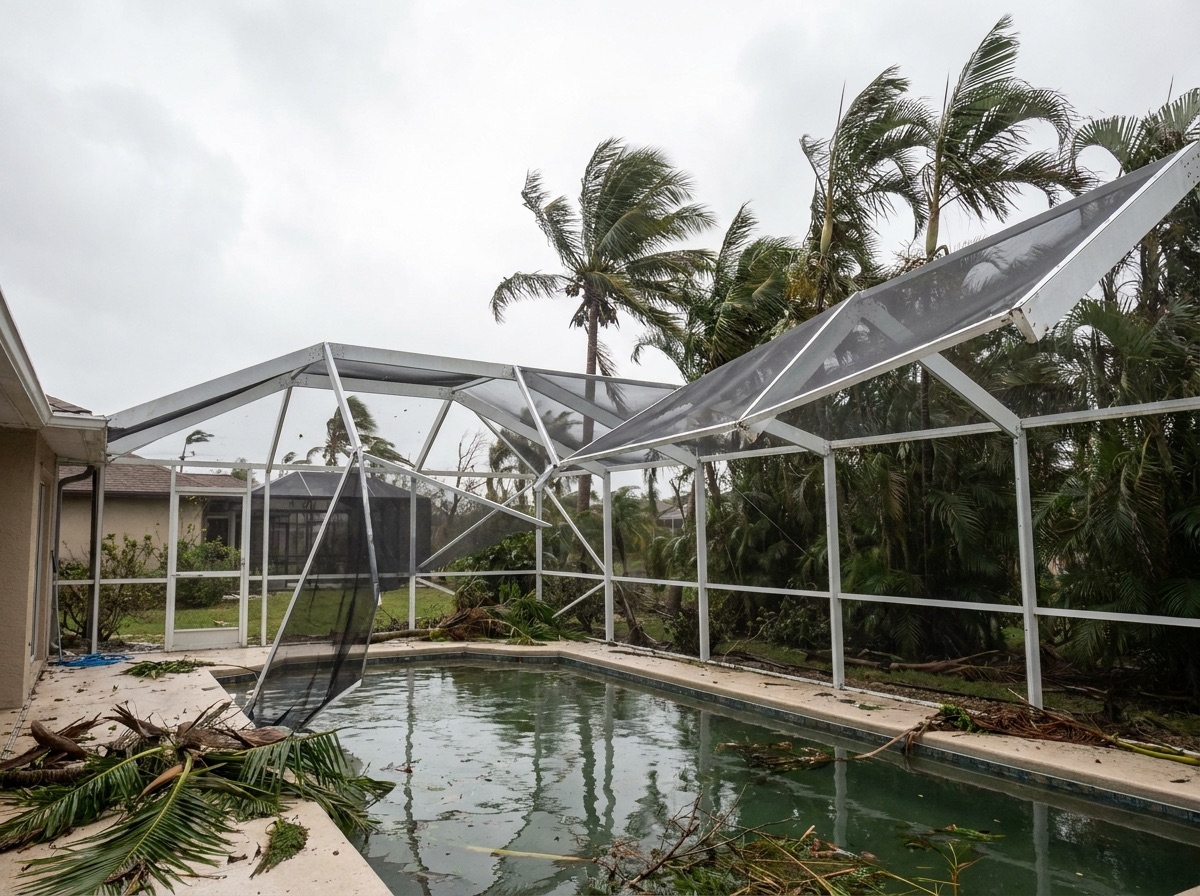
A pool cage rebuild is a complete tear-down and reconstruction of a storm-destroyed or structurally failed pool enclosure, including all aluminum framing, hardware, screen, and anchorage. This is a fundamentally different scope from rescreening - the frame itself is gone, damaged beyond repair, or structurally non-compliant with current Florida Building Code.
Get matched for pool cage rebuild
Free, no obligation. We match you with up to two licensed, insured local pros so you can compare.
- Licensed pros
- Free, no spam
- One call, not eight
Got it. You are in good hands.
A vetted local pro will reach out shortly. For an active emergency, call us now at (813) 555-0911.
A pool cage rebuild is a complete tear-down and reconstruction of a storm-destroyed or structurally failed pool enclosure, including all aluminum framing, hardware, screen, and anchorage. This is a fundamentally different scope from rescreening - the frame itself is gone, damaged beyond repair, or structurally non-compliant with current Florida Building Code. Hurricanes Ian, Idalia, and Milton demonstrated that older pool cages built before Florida's post-2004 code revisions frequently collapse entirely under major storm loading. A rebuild starts from the concrete deck, re-anchors the base rail to engineered specifications, erects new powder-coated aluminum framing, and installs all new screen. Because it involves structural work, a rebuild requires a building permit in every Florida jurisdiction. The result is a code-compliant enclosure with full aluminum warranty coverage.
When you need itSigns you need this service
- The cage frame has collapsed, buckled, or partially fallen onto the pool or deck
- Multiple vertical posts are bent, cracked, or have pulled out of their concrete anchors
- The roof structure has caved in or the screen panels have blown completely off the frame
- A post-storm structural inspection has condemned the existing cage as unsafe
- The cage is more than 20 years old, pre-dates current Florida Building Code wind-load standards, and sustained significant damage
- More than 50% of the frame members require replacement - at which point a full rebuild is more cost-efficient than piecemeal repair
How it works
- Site assessment and engineering reviewA contractor and, for larger or complex cages, a licensed structural engineer assess what remains of the existing structure, evaluate the concrete deck condition and anchor points, and document the original cage dimensions. This informs the permit application and the structural drawings required by the county.
- Permit applicationA full rebuild requires a building permit in all Florida counties. The contractor submits structural drawings, product approvals for aluminum extrusions and hardware, and a site plan. Permit timelines vary from 2 weeks to 8 weeks depending on county backlog - in post-storm periods, county building departments are often overwhelmed and timelines extend significantly.
- Demolition and debris removalThe damaged structure is dismantled and removed from the site. Concrete anchors are inspected - deteriorated or cracked anchor points in the deck must be core-drilled and re-set before framing begins. The deck surface is cleaned and any trip hazards or protruding hardware are addressed.
- Frame fabrication and base rail installationNew aluminum base rail is set and anchored to the concrete per the approved structural drawings. Anchor bolt spacing, embedment depth, and hardware grade are specified on the permit drawings. Vertical posts are set plumb and secured, then horizontal rails and roof framing are assembled. All aluminum is powder-coated for corrosion resistance.
- Screen and hardware installationOnce framing passes rough inspection, screen panels are installed across all wall and roof openings. Door frames are hung, screen doors are fitted and adjusted, and all hardware - closers, latches, hinges - is installed and tested. Screen tension and spline seating are checked across every panel.
- Final inspection and certificate of completionA county building inspector performs a final inspection. Once the work passes, a certificate of completion is issued and recorded against the property. Keep this document - it confirms the cage meets current Florida Building Code wind-load requirements, which is relevant for both insurance and future sale of the home.
What it costs
A typical 500-700 square foot single-story rebuild runs $8,000-$15,000 in most Florida markets; larger footprints, taller cage heights (above 13 feet), screen rooms, or premium screen materials push costs to $18,000-$25,000 or more. Materials - aluminum extrusions, hardware, and screen - account for roughly 60-70% of the total, and aluminum commodity prices have risen materially since 2020. Post-hurricane demand can extend lead times on aluminum extrusions by 4-8 weeks and push contractor labor rates higher, so rebuilds contracted outside peak post-storm windows are typically less expensive.
Pool Cage Rebuild questions
What is the difference between a pool cage rebuild and a rescreening?
A rescreening replaces only the screen fabric while the aluminum frame stays in place and is in structurally sound condition. A rebuild involves demolishing the existing frame - or what remains of it - and constructing an entirely new aluminum structure from the base rail up. Rebuilds require a building permit and structural drawings; rescreenings typically do not. The cost difference is substantial: rescreenings run $1,200-$4,500 while rebuilds typically start around $8,000 and go up from there.
How long does it take to get a permit for a pool cage rebuild in Florida?
In normal conditions, most Florida county building departments process pool enclosure permits in 2-6 weeks from submission of a complete application, which must include structural drawings and product approvals. In the aftermath of a major hurricane, permit offices can be overwhelmed, and timelines stretch to 8-16 weeks in the most-affected counties. Some counties offer expedited review for storm-damage repairs for an additional fee - ask your contractor about this option if speed is a priority.
Does my homeowner's insurance cover a pool cage rebuild after a hurricane?
Pool enclosures are typically covered under the other structures portion of a homeowner's policy if damage is caused by a covered peril such as a named storm. However, Florida policies vary significantly in how screen enclosures are treated, and older policies sometimes limit coverage for screen enclosures to a percentage of the dwelling coverage. Document all damage thoroughly with photographs before any debris removal, get a professional damage assessment, and submit your claim promptly. Coverage questions are specific to your policy and carrier - consult your adjuster for claim guidance.
Can I upgrade the cage design when I rebuild - change the size or height?
Yes. A rebuild is an opportunity to modify the design - expand the footprint, increase the ceiling height, add a hip-roof profile, or incorporate a screen room addition. Any change in dimensions or configuration will require updated structural drawings and may change the permit scope. Additions to the cage footprint that expand onto or over the property line or change drainage patterns may trigger additional review. Discuss the full design intent with your contractor before the permit is submitted so drawings reflect the actual scope.
What wind speed is a new Florida pool cage built to?
All pool enclosures permitted in Florida after the 2004 building code revision must be engineered to meet the Florida Building Code wind-load requirements for the specific location. Required design wind speed varies by county and proximity to the coast - most of South Florida and coastal areas fall in the 150-175 mph ultimate design wind speed zones. Your contractor's structural drawings will specify the design wind speed, and the county inspector verifies compliance. Pre-2004 cages were frequently built to lower standards and are more likely to fail under major hurricane loading.
How do I choose between repairing the existing cage versus a full rebuild?
A repair makes sense when fewer than 30-40% of frame members are damaged and all critical structural elements - base rail anchors, primary vertical posts, main roof ridge - are intact. When damage involves the anchor system, multiple vertical posts, or the roof structure, the labor to repair piecemeal often approaches or exceeds the cost of rebuilding while leaving a structure with mixed-age components and no full structural warranty. A licensed contractor or structural engineer can give you a written assessment that makes this comparison clearly - get that assessment before committing to either path.
Will a rebuilt cage increase my home's value or insurability?
A permitted, code-compliant pool enclosure adds livable outdoor square footage and is generally viewed positively in Florida real estate markets where pool cage ownership is the norm. More practically, a cage with a current certificate of completion demonstrates to both buyers and insurers that the structure meets current wind-load code, which can matter for insurance underwriting on coastal properties. A non-permitted or structurally compromised cage can create complications during a home sale inspection.
What questions should I ask a contractor before hiring them for a rebuild?
Ask for their Florida contractor license number (verify at the DBPR website), their certificate of insurance including general liability and workers' compensation, a list of recent rebuild references in your county, who will pull and manage the permit, which aluminum supplier they use and the product approval numbers, whether they use in-house labor or subcontractors for installation, and what their process is if the county inspector requests changes mid-project. A contractor who is evasive about any of these items is a contractor to avoid.
How long does a new aluminum pool cage last?
A well-built, powder-coated aluminum pool cage in Florida typically lasts 20-30 years structurally with routine maintenance. The screen panels will need replacement every 5-20 years depending on the mesh material chosen. Annual maintenance - inspecting fastener tightness, re-caulking base rail seams, keeping screen clean and free of debris - extends frame life significantly. In salt-air environments closer than a mile to the ocean, more frequent inspections for corrosion are warranted.
What happens if my neighbor's storm-damaged cage falls onto my property?
Liability for storm debris damage is a legal question that turns on specific facts and Florida statutes - this is general information only, not legal advice. As a practical matter, document any damage to your property with dated photographs immediately, contact your own homeowner's insurance to report the damage, and consult an attorney if the damage is significant. Do not remove or alter any of the debris before documenting it thoroughly, as evidence preservation matters if a liability claim is later pursued.