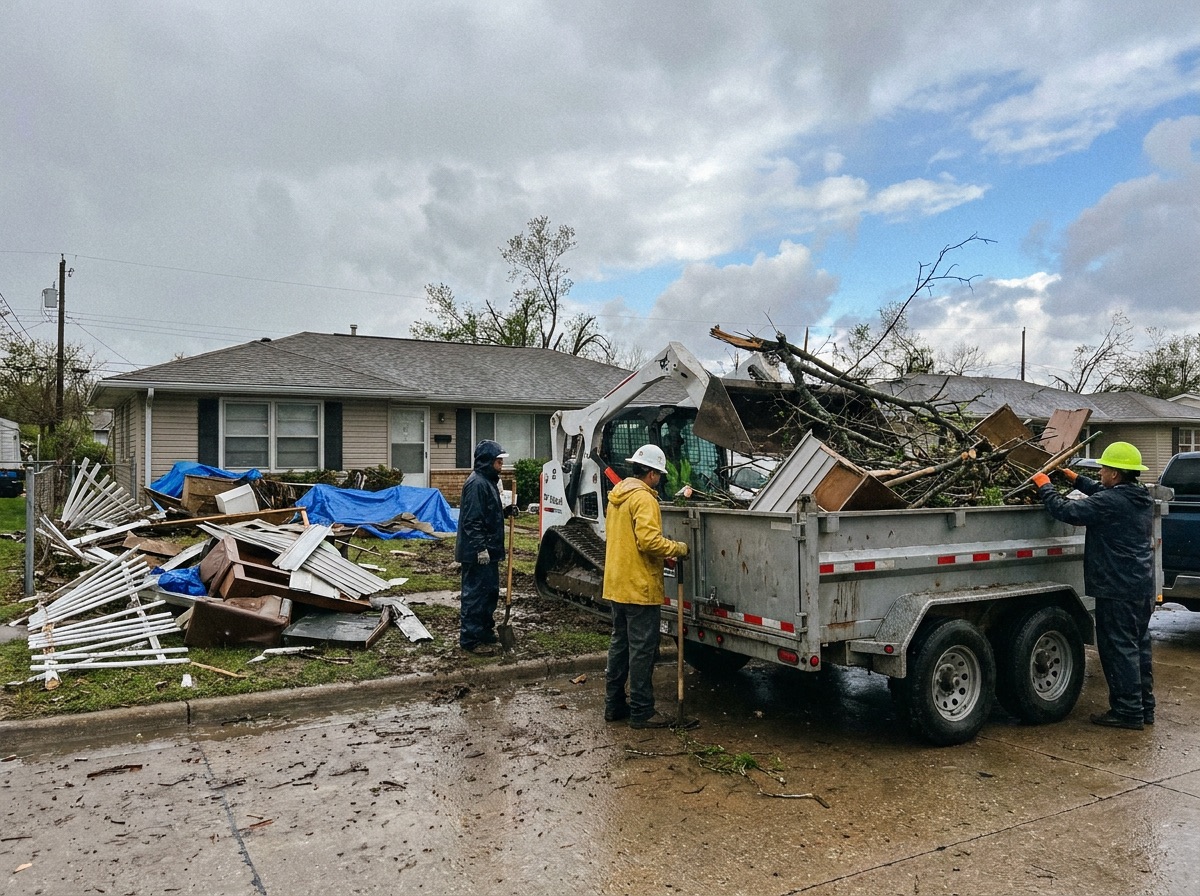
Fallen Tree Debris Removal in Tampa
Cleanup and removal of fallen tree and yard debris. We connect Tampa homeowners with vetted, licensed local pros, free.
Tree Debris in Tampa
Free, no obligation. We match you with up to two licensed, insured local pros so you can compare.
- Licensed pros
- Free, no spam
- One call, not eight
Got it. You are in good hands.
A vetted local pro will reach out shortly. For an active emergency, call us now at (813) 555-0911.
Tampa homeowners turn to fallen tree debris removal after the storms that hit Hillsborough County. Here is exactly what the work involves, what it costs, and how to get matched with a local pro.
Fallen tree debris removal addresses the cleanup, sectioning, and disposal of trees and large limbs brought down by storms - a routine outcome of Florida hurricanes and Illinois severe thunderstorms. The work is distinct from tree removal (cutting down a live, standing tree) because the tree is already down, reducing safety risk but often increasing complexity: root balls may be upended, trunks may be pinning structures, and limbs may be entangled in fencing, pool cages, or rooflines. Crews use chainsaws to section trunks and large limbs into manageable pieces, then use chippers or haul-away trucks to process and dispose of the material. Trunks above a certain diameter are typically cut to rounds and either hauled as firewood or loaded for landfill disposal. In Florida, where oak and pine falls are most common after hurricanes, and in Illinois where ice storms and derecho winds bring down hardwoods, root ball extraction adds excavation and fill-in work that significantly increases cost.
When you need itSigns you need this service
- One or more trees fell during the storm and are lying in the yard, driveway, or on a structure
- Large limbs - greater than 4 inches in diameter - broke off and came down on the property
- A tree is leaning against the house, fence, pool cage, or vehicle after storm damage
- The root ball of a fallen tree is upended, leaving a large crater and unstable soil near the foundation or walkway
- Fallen trees are blocking access to the garage, driveway, or street
- Multiple smaller trees or a line of trees came down along a fence line or property edge
How it works
- Hazard assessment before any cuttingThe crew lead assesses whether the fallen tree is in contact with power lines, has placed load on a structure, or has created tension in the trunk that could cause dangerous kickback when cut. Trees near utility lines require the power company to de-energize the line before chainsaw work begins. This assessment cannot be skipped - it determines the sequence of cuts and required equipment.
- Documentation before moving anythingBefore the crew moves or cuts the tree, the homeowner should photograph the fallen tree from multiple angles showing its position, any structural contact, and surrounding property damage. This documentation supports insurance claims. A reputable crew will pause for you to complete photos if you have not already done so.
- Sectioning the trunk and major limbsChainsaws are used to cut the trunk and large limbs into sections that can be safely handled by the crew. Tension cuts are made first to relieve stored energy in bent or compressed sections - an improper cut sequence can cause trunk sections to spring unexpectedly. Cut sections are staged in a landing zone clear of the structure.
- Chipping or hauling smaller materialBranches up to 4-6 inches in diameter run through a wood chipper on-site. Chips are either hauled away or, at the homeowner's request, left as mulch. Larger trunk sections are loaded onto haul-away trucks or flatbeds depending on size. Hardwood logs may be offered for firewood credit with some contractors.
- Root ball removal and backfill (if applicable)If the root ball upended during the fall, a skid-steer or excavator is brought in to cut the root mass, extract it, and backfill the crater with soil. This step adds cost but prevents a serious tripping hazard and long-term soil instability near structures. The hole left by an untreated root ball can collapse gradually and affect nearby foundations or walkways.
- Site cleanup and debris sweepThe crew rakes the work area, removes bark chips and sawdust from walkways and beds, blows or rakes leaves and small debris generated during the job, and verifies the area is clear before sign-off. Some contractors include a light lawn blowdown; confirm this is included before the job starts.
What it costs
Tree size is the primary cost driver - a 20-foot ornamental that fell costs far less than a 60-foot pine that came down across a fence and driveway. Trunk diameter matters because large hardwood sections require equipment rather than manual handling, and heavier logs mean higher disposal fees. Root ball extraction adds $200-$600 or more to any job because it requires excavation equipment. After major Florida hurricanes, expect price increases of 30-60% due to demand surges and contractor availability constraints. In Illinois, standard post-derecho removal for a single large oak runs roughly $500-$1,500; in Florida, post-hurricane pricing for comparable work runs $600-$2,500 depending on county and storm declaration status.
Tree Debris in Tampa: questions
Do you offer tree debris in Tampa?
Yes. We connect Tampa homeowners with vetted, licensed local pros for fallen tree debris removal, with a free assessment and no obligation.
How fast can someone help with tree debris in Tampa?
For Tampa and the surrounding Hillsborough County area, our network pros prioritize storm work and typically respond same-day or next-day for urgent needs.
Who is responsible for removing a fallen tree in Florida - me or my neighbor?
Florida law generally holds each property owner responsible for debris that originates on their property, regardless of where it lands. If your neighbor's tree was healthy and a storm caused it to fall on your property, your neighbor typically has no legal obligation to pay for removal. If the tree was dead, diseased, or otherwise visibly hazardous and you notified your neighbor in writing before it fell, you may have a stronger claim - but that is a legal question, not a debris removal one. When in doubt, remove the debris promptly to protect your property and consult an attorney if cost recovery is a concern.
Is there a permit required to remove a fallen tree in Florida?
Florida law provides an exemption from local tree removal permits when a tree poses an imminent hazard to structures, persons, or property, including trees downed or damaged by storms. However, some municipalities - notably those with heritage tree ordinances - may require documentation or post-storm notification. Before removing a large specimen tree, especially a protected species like a live oak in many Central Florida municipalities, confirm the local rules with your city or county arborist. In Illinois, requirements vary widely by municipality.
Can I cut up and remove a fallen tree myself?
Small trees and branches under about 4 inches in diameter can often be handled by a capable homeowner with a chainsaw and appropriate safety gear. Trees larger than that - especially those in contact with structures, fencing, or other vegetation - carry real injury risk from tension cuts, rolling logs, and kickback. Trees anywhere near a power line should never be touched by a homeowner. If the tree is over about 20 feet long or is resting on anything, professional removal is the safer choice.
What does 'emergency tree removal' cost after a storm versus a standard job?
Emergency removal - same-day or overnight response, which is common when a tree has fallen on a roof or is blocking the home - typically carries a premium of 25-50% over a standard scheduled job. The premium reflects mobilization cost, after-hours crew availability, and the logistics of fitting an unscheduled job into a full roster. If the tree is not causing active damage or blocking access, waiting even 24-48 hours for a standard dispatch often reduces cost significantly.
What happens to the wood from a removed fallen tree?
Most haulers chip smaller material on-site and dispose of it at a green waste or C&D facility. Larger trunk sections are either hauled to a wood recycler or landfill. Some contractors will leave rounds on-site for firewood if requested. A few Florida and Illinois contractors partner with urban wood rescuers or sawyers who will take clean, large-diameter hardwood logs - ask if that option exists if you want to avoid sending usable timber to the landfill.
How do I know if the root ball needs to be extracted or if it can just be left?
An upended root ball that is more than 3-4 feet in diameter, located within 10 feet of a foundation, walkway, or septic field, or blocking drainage should be extracted and the hole backfilled. A smaller root ball in an open area of the yard can sometimes be cut flush, covered with soil, and left to decompose over several years. The crew lead can advise based on size, location, and soil conditions - but extraction is always the more complete solution.
Will my homeowner's insurance cover fallen tree removal in Florida?
Most Florida homeowner policies cover fallen tree removal when the tree has damaged a covered structure - the house, an attached garage, a fence. If the tree fell in the yard without hitting any structure, coverage for debris removal alone is limited - many policies cap it at $500-$1,000 for debris that did not cause structural damage. This is a policy-specific question; read your declarations page or call your agent before assuming coverage. Document everything before any removal begins regardless of coverage expectations.
How long does a fallen tree removal job typically take?
A single medium-sized tree - say, a 40-foot pine that fell clear in the yard - takes a crew of two or three about two to four hours to section, chip, and clean up. A large tree on a structure takes longer due to the need to carefully remove sections without further damaging the roof or walls, and may take a full day. Multiple trees or a tree with a large root ball extraction can extend the job to multiple days.
What should I do if the fallen tree is near or touching a power line?
Do not approach the tree. Call your utility company immediately - in Florida, FPL and Duke Energy have emergency lines for downed power line situations and will dispatch crews to de-energize and clear the line area. In Illinois, contact ComEd or Ameren depending on your service territory. No licensed tree crew should begin cutting a tree that is in contact with an energized line. Once the utility has cleared the hazard, the tree contractor can proceed safely.
Does fallen tree removal include stump grinding?
No - stump grinding is almost always a separate service with a separate price. Fallen tree removal addresses the above-ground trunk, limbs, and root ball if it upended. If the tree was uprooted, the below-grade root system remains unless specifically included in the scope. If you want the stump ground after removal, ask for it as a line item when getting your estimate. A standard stump grind on a medium tree adds $150-$400 to the job.